Wednesday, December 6, 2017

Luke 24: 51 by Koch

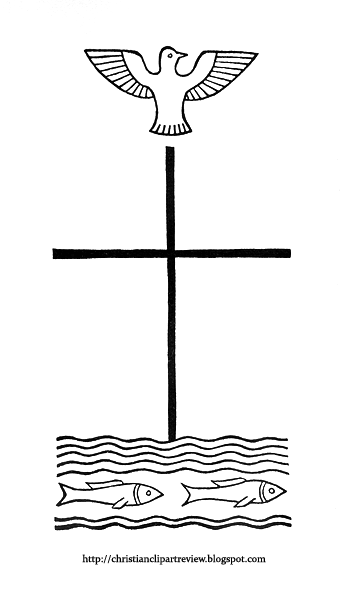
This is an ascension cross symbol. Note the clouds, the cross lifted from
 the earth and the scripture Koch includes is the same as one of three used
on Ascension Sunday.
“And it came to pass, while he blessed them, he was parted from them, and carried up into heaven.” Luke 24:51 King James Version

Rudolf Koch's "Life of Jesus"
1 2 3 4 5 6 7 8 9 10 11 12 13 14 15 16 17 18 19 20 21 22 23 24 25 you are on page 26 27 28

       The Feast of the Ascension of Our Lord and Savior Jesus Christ, also known as Holy Thursday, Ascension Day, or Ascension Thursday, commemorates the Christian belief of the bodily Ascension of Jesus into heaven. It is one of the ecumenical feasts (i.e., universally celebrated) of Christian churches, ranking with the feasts of the Passion, of Easter, and Pentecost. Ascension Day is traditionally celebrated on a Thursday, the fortieth day of Easter (following the accounts given in Mark 16:19, Luke 24:51, Acts 1:2 ), although some Christian denominations have moved the observance to the following Sunday.

1 Corinthians 15: 57 by Koch

“But thanks be to God, which giveth us the victory through our Lord Jesus Christ.” 1 Corinthians 15:57 King James Version

Rudolf Koch's "Life of Jesus"

Matthew 24: 29,30 by Koch

Immediately after the tribulation of those days shall the sun be darkened, and the moon shall not give her light, and the stars shall fall from heaven, and the powers of the heavens shall be shaken:
And then shall appear the sign of the Son of man in heaven: and then shall all the tribes of the earth mourn, and they shall see the Son of man coming in the clouds of heaven with power and great glory.” Matthew 24:29,30 King James Version

Rudolf Koch's "Life of Jesus"

Mark 15: 36-37 by Koch

“And one ran and filled a spunge full of vinegar, and put it on a reed, and gave him to drink, saying, Let alone; let us see whether Elias will come to take him down. And Jesus cried with a loud voice, and gave up the ghost.” Mark 15: 36-37 King James Version

Rudolf Koch's "Life of Jesus"

Mark 1:13 by Koch

“And he was there in the wilderness forty days, tempted of Satan; and was with the wild beasts; and the angels ministered unto him.” Mark 1:13 King James Version

Rudolf Koch's "Life of Jesus"

More Beasts Depicted in Chrismons:

John 2: 1-3

“And the third day there was a marriage in Cana of Galilee; and the mother of Jesus was there: And both Jesus was called, and his disciples, to the marriage. And when they wanted wine, the mother of Jesus saith unto him, They have no wine.” John 2:1-3 King James Version

Rudolf Koch's "Life of Jesus"

Matthew 5:3-11 by Koch

Blessed are the poor in spirit: for theirs is the kingdom of heaven. Blessed are they that mourn: for they shall be comforted. Blessed are the meek: for they shall inherit the earth. Blessed are they which do hunger and thirst after righteousness: for they shall be filled. Blessed are the merciful: for they shall obtain mercy. Blessed are the pure in heart: for they shall see God. Blessed are the peacemakers: for they shall be called the children of God. Blessed are they which are persecuted for righteousness' sake: for theirs is the kingdom of heaven. Blessed are ye, when men shall revile you, and persecute you, and shall say all manner of evil against you falsely, for my sake." Matthew 5:3-11 King James Version

Rudolf Koch's "Life of Jesus"
 

Luke 6:13 by Koch

“And when it was day, he called unto him his disciples: and of them he chose twelve, whom also he named apostles;” Luke 6:13 King James Version

Rudolf Koch's "Life of Jesus"

Mark 6: 41-44 by Koch

“And when he had taken the five loaves and the two fishes, he looked up to heaven, and blessed, and brake the loaves, and gave them to his disciples to set before them; and the two fishes divided he among them all. And they did all eat, and were filled. And they took up twelve baskets full of the fragments, and of the fishes. And they that did eat of the loaves were about five thousand men.” Mark 6: 41-44 King James Version

Rudolf Koch's "Life of Jesus"

More Communion Chrismons:

Matthew 25:1 by Koch

Then shall the kingdom of heaven be likened unto ten virgins, which took their lamps, and went forth to meet the bridegroom.” Matthew 25:1 King James Version

Rudolf Koch's "Life of Jesus"

More Lamp Symbols in Chrismons:

Luke 15:4 by Koch

What man of you, having an hundred sheep, if he lose one of them, doth not leave the ninety and nine in the wilderness, and go after that which is lost, until he find it?” Luke 15:4 King James Version

Rudolf Koch's "Life of Jesus"

More Lambs Included in Chrismons:

Matthew 4:3 by Koch


“And when the tempter came to him, he said, If thou be the Son of God, command that these stones be made bread.” Matthew 4:3 King James Version

Rudolf Koch's "Life of Jesus"

Mark 1: 9-11 by Koch


“And it came to pass in those days, that Jesus came from Nazareth of Galilee, and was baptized of John in Jordan. And straightway coming up out of the water, he saw the heavens opened, and the Spirit like a dove descending upon him: And there came a voice from heaven, saying, Thou art my beloved Son, in whom I am well pleased.” Mark 1: 9-11 King James Version

Rudolf Koch's "Life of Jesus"

More Baptism Chrismons:

Luke 2:46-47 by Koch


“And it came to pass, that after three days they found him in the temple, sitting in the midst of the doctors, both hearing them, and asking them questions. And all that heard him were astonished at his understanding and answers.” Luke 2: 46-47 King James Version

 Rudolf Koch's "Life of Jesus"
1 2 you are on page 3 4 5 6 7 8 9 10 11 12 13 14 15 16 17 18 19 20 21 22 23 24 25 26 27 28

        Candlemas, also known as the Feast of the Presentation of Our Lord Jesus and the Feast of the Purification of the Blessed Virgin Mary, is a Christian Holy Day commemorating the presentation of Jesus at the Temple. It falls on February 2, which is traditionally the 40th day of the Christmas–Epiphany season. While it is customary for Christians in some countries to remove their Christmas decorations on Twelfth Night (Epiphany Eve), those in other Christian countries historically remove them on Candlemas. On Candlemas, many Christians (especially Anglicans, Methodists, Lutherans, Orthodox and Roman Catholics) also bring their candles to their local church, where they are blessed and then used for the rest of the year.

Matthew 2:9 by Koch


“When they had heard the king, they departed; and, lo, the star, which they saw in the east, went before them, till it came and stood over where the young child was.” Matthew 2:9 King James Version

 Rudolf Koch's "Life of Jesus"
1 you are on page 2 3 4 5 6 7 8 9 10 11 12 13 14 15 16 17 18 19 20 21 22 23 24 25 26 27 28
Chrismons About Christ's Birth:

Isaiah 64:1 by Koch


“Oh that thou wouldest rend the heavens, that thou wouldest come down, that the mountains might flow down at thy presence,” Isaiah 64:1 King James Version

 Rudolf Koch's "Life of Jesus"
you are on page 1 2 3 4 5 6 7 8 9 10 11 12 13 14 15 16 17 18 19 20 21 22 23 24 25 26 27 28

Point of Grace "When Love Came Down"

Rudolf Koch's "Life of Jesus"

Rudolf Koch at work.
About Rudolf Koch

       Rudolf Koch  was born on November 20, 1876  and died on April 9th, 1934. Koch was a German type designer. He was also a master of lettering, calligraphy, typography and illustration. Commonly known for his typefaces created for the Klingspor Type Foundry, his most widely used typefaces include Neuland and Kabel.
       Koch spent his teenage years working in Hanau as an apprentice in a metal goods workshop, whilst also attending art school, where he learned to draw, and soon after went to the Academy of Fine Arts, Nuremberg. Between 1897 and 1906 he worked for various businesses in the book trade in Leipzig, illustrating and designing book covers in the Art Nouveau style that was popular at the time. In 1906 Koch began working for the Rudhard Type foundry in Offenbach, later known as the Klingspor Type foundry. Other notable designers who worked for the foundry include Otto Eckmann and Peter Behrens. Koch was deeply spiritual and a devout Lutheran, spending much of his time working on religious publications and manuscripts, of which he completed nearly a hundred in his lifetime. Koch viewed the alphabet as humanity's ultimate achievement. He died prematurely of a heart attack in 1934, aged 59.
       Koch greatly admired William Morris. Speaking at a meeting in London, he expressed his disbelief that Morris was not of German descent: "I feel such a closeness to him that I always have the feeling that he cannot be an Englishman, he must be a German."
       The teachings of Morris and the Arts and Crafts Movement are evident in Koch’s use of hand-lettering and wood-cutting techniques. At the same time, his book illustrations are evocative of Art Nouveau. Koch prized craftsmanship in his type design and printing methods, a principle deeply rooted in the Arts and Crafts Movement. Yet Koch was working in a period of rapid development in print technology, which saw the invention of the Linotype machine in 1886, the Monotype System in 1887, and the offset press in 1907, all of which were antithetical to his artisanal ethos.
Koch lectured at the Arts and Crafts School in Offenbach. In 1918, after World War I, he opened a workshop training students in typography, calligraphy, wood-cutting, and other crafts. Best known for his calligraphic talent he built upon the calligraphic tradition by creating an original, simple expression from his materials.
       Many of Koch’s blackletter typefaces, such as Kochschrift and Willhelm Klingspor Gotisch, were greatly influenced by hand-written manuscripts and Gothic letterforms, a style that originated in Germany. Known also for his nationalistic ideology, he wrote in Der Deutsche, "Even as a boy I wanted to become a proper real German. I hated anything that was foreign, and even as I was growing up I felt this was a sign of true loyalty."
       Koch frequently defended Germanic blackletter script in the journals and publications he contributed to. He also held exhibitions with his group Offenbach Schreiber, which promoted hand lettering and calligraphy, and in these he expressed the revival of traditional lettering. Koch's dedication to Gothic script may have limited his recognition in English-speaking countries. Koch wrote a book containing 493 old-world symbols, monograms and runes entitled The Book of Signs.

Designs by Rudolf Koch and cut on wood by Trude von Guldenstubbe: "The Life of Jesus"

Left, "Rudolph Koch of Offenbach, perhaps the foremost exponent of Christian
art in the modern world, published a collection of early Christian symbols
 in 1932. The present series is drawn from this reservoir. Koch's touch
has revealed their ageless form."  Devin-Adair

Below, An old set of Koch's symbols from the web, including scripture 
references and additional links to more information.
  1. Isaiah 64:1
  2. Matthew 2:9
  3. Luke 2:46,47
  4. Mark 1:9-11
  5. Matthew 4:3 
  6. Mark 1:13
  7. John 2:1-3
  8. Luke 6:13
  9. Matthew 5:3-11
  10. Mark 6:41-44
  11. Matthew 25:1
  12. Luke 15:4
  13. Mark 14:22
  14. John 13:12
  15. Mark 14:32
  16. Matthew 26:16
  17. Mark 14:46-48
  18. Mark 15:15
  19. Matthew 27:29
  20. Matthew 27:35
  21. Mark 15:36,37
  22. John 19:30
  23. John 19:40
  24. Ephesians 4:10
  25. Luke 24:5,6
  26. Luke 24:51
  27. Matthew 24: 29-30
  28. 1 Corinthians 15:57
Christian Symbols drawn by Rudolf Koch in collaboration with Fritz Kredel: Including Scripture References and Links to Similar Symbols

Tuesday, December 5, 2017

The Lion is The Gospel of St. Mark's Symbol


       "St. Mark's is the Gospel for the Romans, the Gospel of incident, the anecdotal Gospel, the Gospel which represents Christ as the Son of God and Lord of the world." 
       His emblem is the lion: expressing courage, dignity, and energy.

Scriptural Resources for The Gospel of St. Mark's Symbol - A Lion:
  • "The beginning of the gospel of Jesus Christ, the Son of God." Mark 1:1 (ESV)
  • "and saying, “The time is fulfilled, and the kingdom of God is at hand; repent and believe in the gospel." Mark 1:15 (ESV)
  • "In those days Jesus came from Nazareth of Galilee and was baptized by John in the Jordan. And when he came up out of the water, immediately he saw the heavens being torn open and the Spirit descending on him like a dove. And a voice came from heaven, “You are my beloved Son; with you I am well pleased." Mark 1:9-11 (ESV)
  • "Passing alongside the Sea of Galilee, he saw Simon and Andrew the brother of Simon casting a net into the sea, for they were fishermen. And Jesus said to them, “Follow me, and I will make you become fishers of men.” And immediately they left their nets and followed him. And going on a little farther, he saw James the son of Zebedee and John his brother, who were in their boat mending the nets. And immediately he called them, and they left their father Zebedee in the boat with the hired servants and followed him." Mark 1:16-20 (ESV)
  • "And no one pours new wine into old wineskins. Otherwise, the wine will burst the skins, and both the wine and the wineskins will be ruined. No, they pour new wine into new wineskins." One Sabbath Jesus was going through the grainfields, and as his disciples walked along, they began to pick some heads of grain. The Pharisees said to him, "Look, why are they doing what is unlawful on the Sabbath?" He answered, "Have you never read what David did when he and his companions were hungry and in need? In the days of Abiathar the high priest, he entered the house of God and ate the consecrated bread, which is lawful only for priests to eat. And he also gave some to his companions." Then he said to them, "The Sabbath was made for man, not man for the Sabbath. So the Son of Man is Lord even of the Sabbath." Mark 2:22-28 (NIV)
  • "At that time people will see the Son of Man coming in clouds with great power and glory. And he will send his angels and gather his elect from the four winds, from the ends of the earth to the ends of the heavens." Mark 13:26-27 (NIV)

The Symbol for The Gospel of Mark is a Lion.


St. Mark's Gospel by Rudolf Koch. To see more lion symbols by Rudolf Koch click here.  

The Man With Wings is The Gospel of St. Matthew's Symbol

Winged man with star for Matthew's Gospel.


       "St. Matthew's is the Gospel for the Jews, the Gospel of the past, the Gospel which sees in Christianity a fulfillment of Judaism, the Gospel of discourses, the didactic Gospel, the Gospel which represents Christ as the Messiah of the Jew."
       His emblem is the man: expressing the kingly and human characteristics of Christ.

Rudolf Koch's Gospel of St. Matthew.
Scriptural Resources for The Gospel of St. Matthew's Symbol - A Winged Man:
  • "The book of the generation of Jesus Christ, the son of David, the son of Abraham." Matthew 1:1(KJB)
  • "Now the birth of Jesus Christ was on this wise: When as his mother Mary was espoused to Joseph, before they came together, she was found with child of the Holy Ghost. Then Joseph her husband, being a just man, and not willing to make her a publick example, was minded to put her away privily. But while he thought on these things, behold, the angel of the Lord appeared unto him in a dream, saying, Joseph, thou son of David, fear not to take unto thee Mary thy wife: for that which is conceived in her is of the Holy Ghost." Matthew 1:18-20 (KJB)
  • "Behold, a virgin shall be with child, and shall bring forth a son, and they shall call his name Emmanuel, which being interpreted is, God with us." Matthew 1:23 (KJB)
  • "From that time on Jesus began to preach, "Repent, for the kingdom of heaven is near." Matthew 4:17 (BSB)
  • ""In Bethlehem in Judea," they said, "for this is what the prophet wrote: 'And you, O Bethlehem in the land of Judah, are not least among the ruling cities of Judah, for a ruler will come from you who will be the shepherd for my people Israel.'" Matthew 2:5-6 (NLT)
  • "Then what was spoken through the prophet Jeremiah was fulfilled: "A voice is heard in Ramah, weeping and great mourning, Rachel weeping for her children, and refusing consolation, because they are no more." Matthew 2:17-18 (BSB)
 
St. Matthew's Gospel, winged man in medallion.

The Ox is The Gospel of St. Luke's Symbol

Ox symbol with wings and star.
 
      "St. Luke's is the Gospel for the Greeks, the Gospel of the future, the Gospel of progressive Christianity, of the universality and gratuitousness of the Gospel, the historic Gospel, the Gospel of Jesus as the Good Physician and Savior of Mankind." 
       His emblem is the ox: expressing power and sacrifice, Christ's priestly and mediatorial office.

Scriptural Resources for The Gospel of St. Luke's Symbol - An Ox:
  • "But Jesus was saying, "Father, forgive them; for they do not know what they are doing." And they cast lots, dividing up His garments among themselves." Luke 23:47 (NIV)
  • "But Jesus was saying, "Father, forgive them; for they do not know what they are doing." And they cast lots, dividing up His garments among themselves." Luke 6:27 (NLT)
  • "And He withdrew from them about a stone's throw, and He knelt down and began to pray, saying, "Father, if You are willing, remove this cup from Me; yet not My will, but Yours be done." Luke 22: 41-42 (NASB) 
  • "But Jesus was saying, "Father, forgive them; for they do not know what they are doing." And they cast lots, dividing up His garments among themselves." Luke 23:34 (NASB)
The above Gospel of St. Luke is by Rudolf Koch.
 
St. Luke's Gospel, ox inside a medallion.

 
More About The Ox:

Monday, December 4, 2017

The Eagle is The Gospel of St. John's Symbol


Eagle head with halo.
      "St. John's is preeminently the Gospel for the church, the Gospel of eternity, the spiritual Gospel, the Gospel of Christ as the Eternal Son, and the Incarnate Word." His emblem is the eagle: because "he soars to heaven above the clouds of human infirmity, and reveals to us the mysteries of the God-head, and the felicities of eternal life, gazing on the light of immutable truth with a keen and steady ken."

Scriptural Resources for The Gospel of John's Symbol - An Eagle:
  • Jesus said to them, "Truly, truly, I say to you, before Abraham was born, I am." John 8:58
  • The crowd then answered Him, "We have heard out of the Law that the Christ is to remain forever; and how can You say, 'The Son of Man must be lifted up'? Who is this Son of Man?" John 12:34
  • "The slave does not remain in the house forever; the son does remain forever." John 8:35 

 
St. John's symbol, the eagle, by Rudolf Koch.

Gospel of John, eagle medallion